


Table of Contents
A business approach based on sound decision-making is an indispensable requirement for success. To this end, the various data analysis methods constitute fundamental support.
This is particularly useful, especially in logistics companies and those providing specialized technical service delivery. These sectors depend, to a great extent, on their agility and operational efficiency.
Adopting the different data analysis methods can generate significant improvements and, ultimately, achieve sustainable growth for an organization. In this article, we will present the most efficient ones.
Main Data Analysis Methods
Data-driven decision-making has consolidated as an essential practice in modern companies. Data analysis methods provide the ability to transform large volumes of information into relevant insights.
This practice allows optimizing operations, anticipating market changes, and responding effectively to customer needs. All of this, undoubtedly, translates into efficiency and competitiveness.
There are several approaches to analyzing business data, each with its own characteristics and benefits. The three most common methods are descriptive, predictive, and prescriptive analysis.
These combined methods offer a comprehensive view that ranges from historical statistics to future planning. Below, we explain each of them in detail.
Descriptive Analysis
Descriptive analysis is the starting point in the data analysis cycle. It involves organizing and summarizing information to answer the question: What has happened?
This approach uses tools such as tables, charts, basic statistical measures (mean, median, standard deviation), and distribution analysis to facilitate data comprehension.
Descriptive analysis is fundamental for identifying past patterns and trends. For example, customer behavior or the performance of a product over time.
Predictive Analysis
Predictive analysis uses statistical models and advanced algorithms to forecast future events based on historical data. It answers the question: What could happen?
Through techniques such as regression, time series analysis, and machine learning algorithms, companies can anticipate possible scenarios: demand fluctuation, the probability of customer loss, or the future performance of an investment, among others.
This method is key for strategic planning because it can predict, for example, which type of customers are most likely to experience device failure. This allows implementing proactive measures before significant simultaneous failures occur.
Prescriptive Analysis
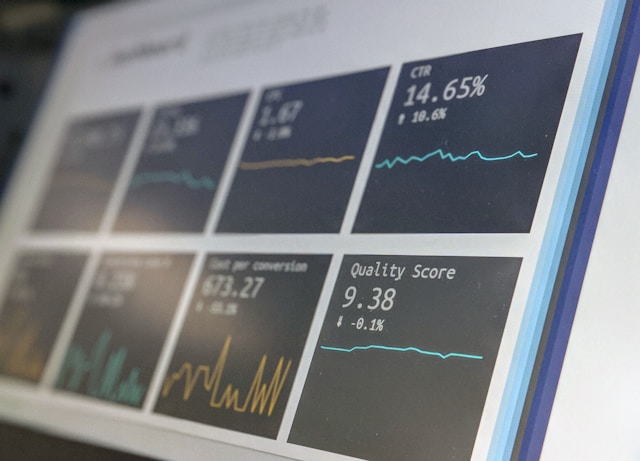
Among data analysis methods, prescriptive is the most advanced. It answers the question: What actions should we take? It not only predicts future trends but also offers recommendations on how to act in different scenarios.
This type of analysis combines historical data, predictive models, and simulations to suggest the best decisions based on projections from current circumstances. It is useful, especially in resource optimization and business process improvement.
This ability to offer specific and personalized solutions makes prescriptive analysis an essential tool for companies seeking to maximize their operational efficiency.
Comparison and Business Applications
In the Last Mile logistics sector for specialized technical services, the different data analysis methods are necessary to improve operational efficiency. Each of them offers different possibilities.
- Descriptive analysis allows companies to understand historical patterns in service delivery, identifying response times and areas with the highest incidence. This helps optimize routes and resources, reducing costs and improving customer satisfaction.
- Predictive analysis focuses on forecasting future demand, anticipating work peaks. It allows adjusting personnel and spare parts based on this information. Additionally, it is possible to prevent logistical problems by optimizing routes in real time.
- Prescriptive analysis offers recommendations based on simulations and scenarios, such as adjusting assets, inventories, and personnel according to the most up-to-date conditions. This approach improves response capacity, reduces operational costs, and increases service quality in a competitive environment.
Recommendations for Implementing Data Analysis

To implement data analysis in your company, start by clearly defining the objectives you want to achieve. For example, optimizing processes or improving decision-making.
Invest in appropriate tools and make sure your teams have the necessary competencies in data analysis. It is essential to centralize information on a unified platform to ensure data consistency.
Establish a workflow that allows constant review of analyses and encourages evidence-based decision-making. Finally, consider the possibility of integrating artificial intelligence to enhance predictive and prescriptive analyses.
Fielder is a platform designed to optimize Last Mile management in the delivery of specialized technical services. It uses advanced technology based on real-time data analysis, employing predictive, prescriptive methods, and artificial intelligence.
This allows companies to anticipate demand and inventories, adjust routes, and assign personnel efficiently. By analyzing variables such as committed service level (on-site response time) and availability, Fielder increases operational precision, reduces costs, wait times, and improves the customer experience.
Conclusion
Data analysis methods are necessary tools for any company seeking to optimize its performance and make informed decisions.
Descriptive analysis offers a clear view of the past, while predictive analysis allows anticipating future events. Prescriptive analysis, on the other hand, suggests specific actions based on scenarios and current data.
By integrating these approaches, organizations improve their operational efficiency and achieve a competitive advantage by adapting quickly to changing market conditions.
Optimize your data analysis with advanced solutions like those provided by our platform Fielder.
You may be interested in:
Last Mile: Innovation and Efficiency in the Delivery of Specialized Technical Services
Digital Transformation and Automation: How Can IT and Telecommunications SMEs Achieve Them?
How to Leverage Data Intelligence, Trends, and Predictability to Master Field Service Management