


Table of Contents
More and more companies are adopting innovative tools and strategies to address the challenges associated with traditional last mile logistics of specialized technical services across all industries.
This can encompass installations and maintenance of computer equipment, printers, refrigerators, freezers, solar panels, ATMs, and telecommunications antennas. In general, any component that requires a specialized technician to diagnose or repair a fault.
This is a crucial step in the supply chain: it is the final point of contact between companies and users, which directly influences customer satisfaction and loyalty.
These technologies are revolutionizing not only the way products and services are delivered but also the customer experience. They now make the process more efficient, cost-effective, and environmentally sustainable. In this article, we explain how the last mile achieves this.
The Last Mile in the Digital Age: Challenges and Opportunities
In the digital age, the last mile process faces significant challenges. The growing demand for immediate and excellent quality service delivery, driven by the rise of servitization, puts pressure on companies to innovate in last mile logistics.
Traditional methods of planning service categories, response and resolution times, routes, and assignment of specialized technicians lack automation and rely on manual calculations and human judgment.
This generates high costs and operational inefficiencies, and difficulties in meeting customer service expectations.
Manual processes, such as paperwork, phone calls, and physical paper service orders, consume a lot of time and are prone to errors. These generate repetitive activities and rework, which increase costs and do not add value to the operation.
Furthermore, traditional last mile logistics often lacks visibility into service status and real-time technician execution.
This limited tracking capability makes it difficult for service provider companies to control the movement of crews, assets, parts, and technicians. In turn, it makes it difficult for them to provide accurate and transparent site arrival estimates to customers for service.
In response, the digital age also presents unique opportunities. The adoption of advanced technologies, such as Artificial Intelligence (AI) and Machine Learning (ML), can answer operational queries in seconds. Additionally, they can generate recommendations on trends to streamline operations, reduce costs, generate savings, increase profitability, and deliver the best service experience.
Real-time tracking platforms improve transparency and customer satisfaction. This combined with mobility through apps offers innovative alternatives to improve the experience of everyone involved in a service, opening new possibilities for last mile logistics across all industries.
The Strategic Importance of the Last Mile in Customer Experience

The last mile directly impacts customer satisfaction, as timely and efficient delivery reinforces the positive perception of the brand. Speed and precision in this segment are essential to meet the growing expectations of modern customers, accustomed to immediacy.
Efficient and precise last mile management can also build customer loyalty by offering flexible service delivery options and real-time tracking.
Companies that invest in optimizing this process manage to differentiate themselves in a competitive market. The last mile directly impacts customer satisfaction, as timely and efficient delivery reinforces the positive perception of the brand. Speed and precision in this segment are essential to meet the growing expectations of modern customers, accustomed to immediacy.
Efficient and precise last mile management can also build customer loyalty by offering flexible service delivery options and real-time tracking.
Emerging trends in last mile operations
In last mile operations, certain emerging trends are transforming the logistics landscape. One of the main ones is the use of electric vehicles and bicycles to reduce the carbon footprint and comply with environmental regulations.
Additionally, technologies such as process automation, ML, and AI are revolutionizing. For example, with the identification of density of service categories requested by zones, delivery route planning, asset management, inventories, skills, and location of specialized field technicians available to take services. These optimize efficiency by reducing delivery times.
Looking to the future, drones and robots are in the testing phase and are emerging as viable alternatives to speed up the delivery process of parts and spare parts in congested urban areas.
At the same time, pickup points and smart lockers are gaining popularity. They offer specialized technicians convenient and secure options for stocking tools, supplies, and spare parts to execute their services on time.
These trends are reshaping the future of the last mile, making it more efficient, sustainable, and customer-centric. Without a doubt, these are alternatives you cannot overlook.
Technological Innovations in Last Mile Management
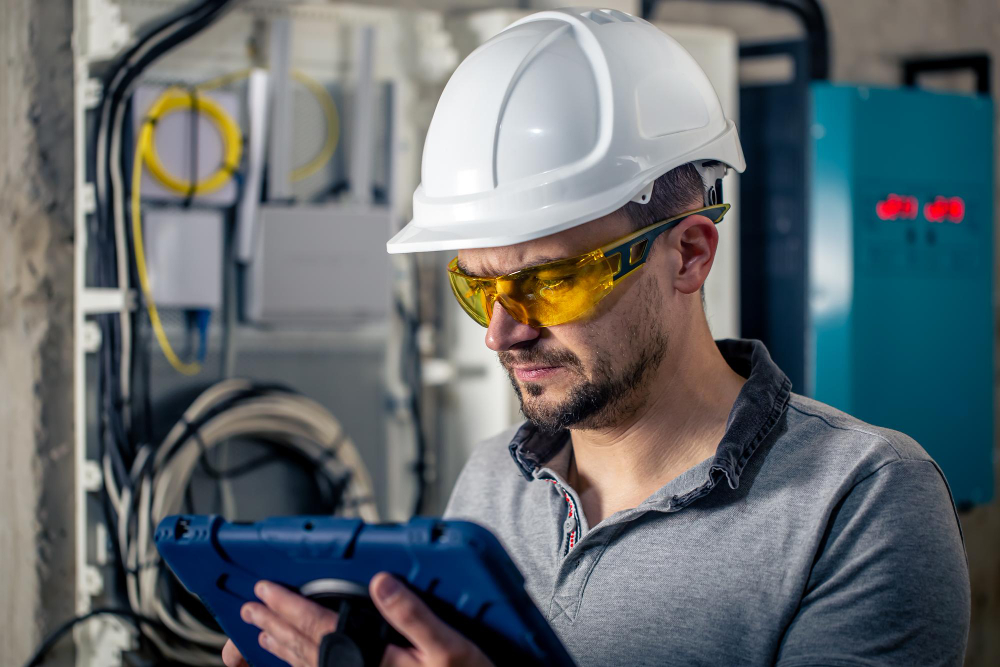
With the arrival of technology, any process becomes more efficient and agile in last mile management. Thus transforming the delivery of specialized technical services.
Artificial Intelligence and Machine Learning are already being used to optimize routes and foresee problems, improving operational efficiency. Process automation facilitates the coordination and tracking of tasks, reducing response times and human errors.
These technologies enable more agile and precise management, improving customer satisfaction and reducing operational costs. The integration of these tools ensures a more reliable service adapted to the specific needs of each customer, consolidating a significant competitive advantage.
AI and Machine Learning: Analytics, data and real-time trends for agile and assertive decision-making
Artificial Intelligence and Machine Learning are transforming the last mile of specialized technical service delivery. They offer advanced analytics and real-time trends that facilitate agile and assertive decision-making.
These technologies are used to process and analyze large volumes of data. They thus provide valuable information that enables companies to anticipate problems and optimize their resources.
Predictive analytics is key to foreseeing potential incidents and planning routes efficiently, which reduces response times and improves customer satisfaction.
Additionally, real-time analysis allows technical teams to react quickly to unexpected changes, proactively adapting to customer and market needs.
Machine Learning enhances these capabilities by continuously learning from collected data, improving predictions and decision-making over time. This technology identifies patterns and trends that would not be evident at first glance, enabling precise and timely adjustments in logistics and service management.
Process automation: improving operational efficiency
Process automation is revolutionizing the practice of these services, significantly improving operational efficiency. By employing these advanced technologies, routine and repetitive tasks are automated, allowing technical teams to focus on higher-value activities.
One of the main advantages of automation is the reduction of human errors. This translates into greater precision and consistency in task execution.
By automating appointment scheduling, resource allocation, and parts and spare parts inventory management, companies can optimize the use of their resources and minimize downtime. This improves efficiency and reduces operational costs.
On the other hand, automation enables better coordination and tracking of activities in real time. Technicians can receive instant updates and notifications about changes in their tasks, improving communication and collaboration among teams.
This facilitates a faster response to customer needs and greater flexibility to adapt to unforeseen changes.
Strategies for Successful Last Mile Delivery

Without a doubt, the last mile is essential for customer satisfaction and operational efficiency. In an environment where expectations are increasingly high, companies must implement effective strategies to ensure successful delivery.
Among these strategies, personalization of the service experience and proactive inventory management are fundamental. Below, we explain them in greater detail.
Personalizing the service experience: exceeding customer expectations
Personalizing the service experience is redefining the last mile of delivery in specialized technical services. It is necessary to exceed customer expectations and adapt each interaction according to their specific needs.
Through the use of data and advanced analytics, companies can offer personalized solutions, improving customer satisfaction and loyalty.
The ability to adjust service schedules, anticipate problems, and provide real-time updates ensures a smooth and efficient experience.
Personalization allows technicians to better prepare for each task, optimizing problem resolution and minimizing wait times.
Such personalization not only elevates the level of service but also strengthens the relationship with customers, creating added value and differentiating in a competitive market.
Proactive inventory management: minimizing losses and maximizing profits
Proactive inventory management is crucial for minimizing losses and maximizing profits in the last mile. Thanks to advanced technologies, you can improve inventory control and administration, enabling greater operational efficiency and profitability.
Proactive management involves the use of real-time monitoring systems and predictive analytics to anticipate demand and optimally adjust inventory levels.
This reduces the possibility of excess stock or shortages, ensuring that technicians always have the necessary resources to complete their tasks without delays.
Additionally, precise inventory tracking helps quickly identify and correct any discrepancies, avoiding unnecessary losses.
The integration of AI and Machine Learning in inventory management enables analyzing consumption patterns and trends, facilitating informed decisions about purchases and replenishments.
Best Practices in Last Mile Customer Service

Customer service in the last mile is fundamental to ensuring a positive experience and fostering loyalty. It makes the difference between a satisfying experience and a disappointing one!
Best practices in customer service focus on two key areas: real-time communication and rapid, anticipated problem resolution. Let us look at each of them.
Real-time communication: keeping customers informed at all times
Real-time communication is essential for keeping customers informed at all times during the last mile. It is necessary to provide advanced tools that enable continuous and transparent interaction between technicians and customers.
Keeping customers informed about the status of their services in real time builds trust and significantly improves the user experience.
Customers receive instant updates about technician arrival, work progress, and any unexpected schedule changes. This transparency not only reduces customer uncertainty and anxiety but also enables more effective time planning.
Real-time communication facilitates better coordination between technical teams and customer support, ensuring that any problem or inquiry is addressed immediately.
The ability to send and receive instant messages, notifications, and alerts ensures that all parties are aligned and can respond quickly to any contingency.
By keeping customers informed and connected at every step of the process, companies can offer a more reliable, efficient, and satisfying service. Additionally, they strengthen their reputation and competitiveness in the market.
Rapid and Anticipated Problem Resolution: Minimizing the Impact of Reports and Incidents
Rapid and anticipated problem resolution is fundamental to minimizing the impact of reports and incidents. It is important to identify and resolve problems before they affect the customer.
The use of Artificial Intelligence and Machine Learning facilitates early detection of anomalies and prediction of possible failures. This allows technicians to take preventive measures, avoiding interruptions and ensuring continuous service.
The ability to monitor and analyze data in real time ensures that any problem is addressed immediately, reducing downtime and improving operational efficiency.
Proactivity in incident management increases customer satisfaction by providing quick and effective solutions. Additionally, it optimizes resource use and reduces costs associated with unplanned repairs and maintenance.
Conclusion
Last mile logistics is going through a critical inflection point. Incorporating technology-driven solutions is not simply an option; it is a necessity for companies seeking to thrive in this dynamic industry.
The potential to reshape this logistics through cutting-edge technologies is immense. It offers promising avenues to increase efficiency, sustainability, and customer satisfaction.
As this sector continues its relentless advance, those who adopt these technologies will lead the way in revolutionizing logistics practices. Do you want to join this visionary and successful group?
At Fielder, we provide you with a powerful platform to start making your processes more efficient and agile.
Discover how these innovations can transform your company. Talk to an advisor today for more information and to improve your last mile logistics!